

Introduction
You spent real money on your anime figures. Some of them took weeks to track down. A few came all the way from Japan. The last thing you want is to wake up one morning and find your favorite scale figure toppled over, covered in dust, or slowly fading from sun damage.
Learning how to display anime figures safely at home is one of the most important things you can do as a collector. It is not just about making your shelf look good. It is about protecting your investment, preserving the quality of the paint and plastic, and giving your figures the respect they deserve.
In this guide, you will learn everything from choosing the right display case to securing your figures against falls. You will also find practical tips, real solutions to common problems, and answers to the questions collectors ask most. Whether you are just starting out or you already have a full collection, this guide has something useful for you.
What You Need Before You Start
Before you start placing figures on shelves, you need a few things ready. Rushing this step is how most collectors end up with damaged or poorly displayed pieces.
Here is what you should gather before you begin:
Display essentials:
- A sturdy shelf, display cabinet, or dedicated figure case
- Microfiber cleaning cloths
- Museum putty or figure stands for stability
- UV-filtering glass or acrylic panels (if using an open shelf)
- A soft brush for dust removal
- LED lighting strips or a small spotlight (optional but highly recommended)
Optional upgrades:
- A hygrometer to monitor humidity levels in the room
- Silica gel packets to control moisture inside closed cabinets
- Foam or velvet shelf liners for a cleaner look and added grip
- A label maker or small cards to identify your figures
You do not need all of these at once. Start with the basics and build from there as your collection grows.
Step-by-Step: How to Display Anime Figures Safely at Home
Step 1: Choose the Right Display Case or Shelf
Your display setup is the foundation of everything else. The wrong shelf can lead to falls, dust buildup, and UV damage. The right one keeps your figures safe and looking great.
Open shelves are affordable and easy to set up. They give your room a clean, gallery-style look. The downside is that dust settles quickly and there is no UV protection unless you add panels yourself.
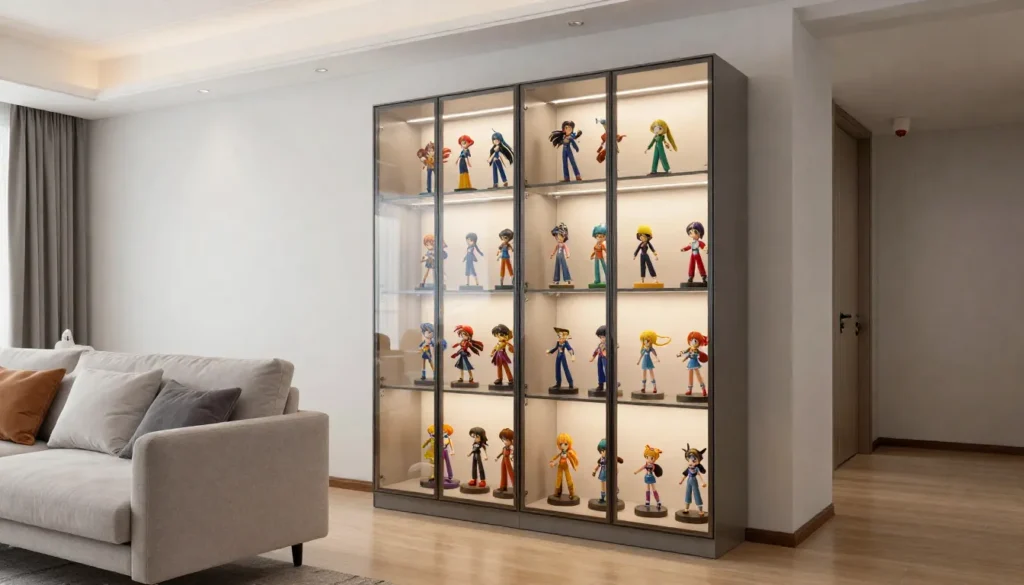
Closed display cases are the gold standard for serious collectors. They block dust, reduce the risk of accidental knocks, and often come with built-in lighting. Look for cases with tempered glass doors and solid wood or metal frames.
Detolf-style IKEA cabinets have become incredibly popular in the anime figure community. They are affordable, tall, and easy to customize with LED strips and extra shelves. Many collectors swear by them as a starting point.
When choosing a shelf or case, ask yourself these questions. Is it deep enough for your largest figures? Is it tall enough for 1/4 scale pieces? Can it hold the weight of a full display without bowing or warping?
Step 2: Pick the Perfect Spot in Your Room
Where you place your figures matters just as much as how you display them. A bad location can slowly destroy even the most expensive figures.
Avoid these spots:
- Direct sunlight from windows (causes fading, warping, and yellowing)
- Near air conditioning or heating vents (temperature swings damage paint and plastic)
- High-humidity areas like bathrooms or kitchens (moisture causes mold and deterioration)
- Places with heavy foot traffic (higher chance of accidental bumps)
Ideal locations include:
- An interior wall away from windows
- A dedicated room or hobby corner with controlled temperature
- A spot with consistent, moderate lighting
Sunlight is probably the biggest threat to your collection. Even indirect sunlight through a window can cause noticeable fading over months. If your only option involves some sun exposure, invest in UV-filtering window film or make sure your display case has UV-protective glass.
Step 3: Prepare the Surface
Before placing any figures, clean and prepare the shelf surface. This step takes ten minutes and makes a real difference.
Wipe down the shelf with a dry microfiber cloth to remove any dust or debris. If the shelf is wooden, check for rough spots that could scratch the bases of your figures. A smooth shelf liner in velvet or foam adds a soft surface and a visual upgrade at the same time.
For open shelves, consider applying a thin, non-stick mat. It gives your figures more grip and reduces the chance of sliding. You can find these at most home goods stores or online.
Step 4: Arrange Your Figures Thoughtfully
This is where the fun begins. Arranging figures well takes a bit of planning, but the results are worth it.
General arrangement tips:
- Place taller figures at the back and shorter ones in front
- Group figures by series, scale, or theme for a cohesive look
- Leave space between figures so they are not touching each other
- Rotate figures periodically so all sides get viewed and dust builds up evenly
Do not overcrowd your shelves. A crowded display looks messy and increases the risk of figures knocking into each other. Less is often more. A few well-placed figures on a clean shelf look far better than a chaotic pile.
For dynamic figures with wide bases or large accessories, give them extra space. Some scale figures have swords, wings, or other elements that extend beyond the base. Make sure these do not bump into adjacent figures or the sides of your cabinet.
Step 5: Set Up Lighting
Good lighting transforms a display from average to stunning. It also lets you see fine details in your figures that you might otherwise miss.
LED strip lights are the most popular choice. You can mount them along the inside edges of a display case to illuminate your figures evenly. Warm white or cool white LEDs both work well. Choose based on the mood you want.
Small spotlights or puck lights work great for highlighting a specific hero figure or a centerpiece piece. You can angle them to cast dramatic shadows that make dynamic figures look even more impressive.
What to avoid:
- Incandescent bulbs that emit heat (heat warps plastic over time)
- Lights placed too close to figures
- Overly bright lighting that washes out detail
LEDs are the safest option because they emit very little heat and last for years. Many are also dimmable, which gives you control over the ambiance of your display.
Step 6: Secure Your Figures
This step is often skipped, and it is a mistake. Figures fall. It happens. An accidental nudge, a vibration from a door slamming, or even a small earthquake can send your figures to the floor.
Museum putty (also called earthquake putty or poster putty) is one of the easiest and most effective solutions. Press a small amount under the base of each figure. It holds them in place without leaving any residue or causing damage. It is removable and reusable, which makes it perfect for collectors who rearrange their shelves often.
Figure stands and display stands are useful for figures with awkward bases or poor balance. Many scale figures come with their own stands, but third-party stands offer more flexibility for positioning.
For closed display cases, make sure the doors have a reliable latch. A cabinet that swings open on its own is a serious hazard for your collection.
Tips and Tricks for a Better Display
These are the small things that make a big difference over time.
Clean regularly. Dust is your figures’ worst enemy over the long term. Use a soft brush or a can of compressed air on detailed areas. Wipe flat surfaces with a dry microfiber cloth. Avoid wet cleaning unless necessary, and always use products safe for plastics when you do.
Rotate your display. Showing the same side of a figure all the time means one side gets more sun and dust exposure. Rotating them every few months distributes wear evenly and lets you appreciate different angles.
Keep track of your collection. Use a spreadsheet or an app like MyFigureCollection to log what you own. This helps with insurance purposes too, in case anything is damaged or stolen.
Store boxes properly. Even if you display your figures, keep the original boxes. They protect figures during moves and maintain resale value significantly.
Control the environment. Aim for a room temperature between 18°C and 24°C (65°F to 75°F) and a humidity level below 60%. Extreme conditions damage plastic and paint over time.
Use background panels. Adding a printed background scene or colored mat behind your figures adds depth to your display. Many collectors create custom dioramas this way.
Common Problems Collectors Face
Even careful collectors run into issues. Here are the most common ones.
Yellowing of white or light-colored parts. This happens when PVC plastic oxidizes, especially on older figures or those exposed to UV light over time.
Toppling figures. Figures with small bases, high centers of gravity, or thin accessories are prone to tipping. This is a safety and quality issue.
Dust accumulation. Open shelves collect dust fast. Detailed figures with lots of crevices are especially difficult to clean.
Fading paint and details. Prolonged exposure to sunlight or strong artificial light washes out colors and causes decals to fade.
Sticky or tacky surfaces. Some PVC figures develop a sticky texture over time, which is a result of plasticizer migration.
Mold or mildew inside closed cases. Poor ventilation in closed display cases can lead to moisture buildup, especially in humid climates.
Leaning or warping. Figures with thin legs or long accessories may lean or warp over time, especially in warm environments.
Solutions That Actually Work
Every one of these problems has a fix. Here is what actually works.
For yellowing: Retrobright is a DIY solution that uses hydrogen peroxide and UV light to reverse yellowing on plastic. It works best on PVC and has saved many collector figures. Use it carefully and always test on a small hidden area first.
For toppling: Apply museum putty under the base. For seriously unstable figures, use a heavy third-party acrylic display stand or create a small sandbag base from craft supplies.
For dust: Switch to a closed display case with doors. If you prefer open shelves, commit to a weekly dusting routine. A Swiffer duster or soft paintbrush gets into detailed areas without scratching.
For fading: Move your display away from all light sources that contain UV rays. Add UV-filtering film to nearby windows. Use low-UV LED lights exclusively for your display lighting.
For sticky surfaces: Wipe the figure gently with a cloth slightly dampened with isopropyl alcohol (70% or less). This removes surface plasticizer. The stickiness may return over time, which means the figure is aging and needs climate-controlled storage.
For mold in closed cases: Place silica gel packets inside the cabinet. Replace or recharge them every few months. You can also leave the cabinet door slightly open for an hour each week to let air circulate.
For leaning and warping: Use a hair dryer on a low setting to gently warm the affected part and reshape it. Hold it in the correct position while it cools. This works surprisingly well on PVC. For long-term prevention, keep your room temperature consistent and avoid placing heavy accessories on thin parts.
Frequently Asked Questions
Q: What is the safest type of display case for anime figures? A: A closed glass or acrylic display case with UV-filtering panels is the safest option. It blocks dust, reduces UV exposure, and protects your figures from accidental bumps.
Q: How do I keep my anime figures from falling over? A: Use museum putty under the base of each figure. It holds them securely without damaging the figure or the shelf, and it is easy to remove when you rearrange.
Q: Can I display anime figures in direct sunlight? A: No. Direct sunlight causes fading, yellowing, and warping. Always place your figures away from windows or use UV-filtering film and UV-protective glass to block harmful rays.
Q: How often should I dust my anime figures? A: Dust open shelves at least once a week. For closed display cases, a monthly dusting is usually enough. Use a soft brush or microfiber cloth.
Q: Is it safe to use LED lights inside a display case? A: Yes, LEDs are the best lighting option for figure displays. They emit very little heat and last a long time. Avoid placing them too close to figures and choose LEDs without UV emission.
Q: What causes anime figures to turn yellow? A: Yellowing is caused by UV exposure and natural oxidation of PVC plastic over time. Keeping figures away from light and storing them in cool, dry places slows this process significantly.
Q: Should I keep the original boxes for my figures? A: Yes. Original boxes protect figures during transport and are important for maintaining resale value. Store them flat in a cool, dry place away from direct light.
Q: How do I clean a figure that has a sticky surface? A: Wipe it gently with a cloth dampened with isopropyl alcohol at 70% concentration or less. This removes the plasticizer that causes the sticky feeling. Repeat as needed.
Q: Can I display figures in a humid room? A: It is not ideal. High humidity causes moisture damage, mold, and deterioration of paint. If your room is humid, use silica gel packets inside your display case and aim to keep humidity below 60%.
Q: What is museum putty and where can I buy it? A: Museum putty is a removable adhesive putty designed to secure objects on shelves without permanent damage. Brands like Quake Hold and Loctite make popular versions. You can find it at hardware stores, craft stores, and on Amazon.
Final Thoughts
Knowing how to display anime figures safely at home does not require a big budget or a professional setup. It starts with choosing the right location, using the right case, and taking simple steps to protect your figures from dust, light, and falls.
Your collection represents real money and real passion. A little planning now saves you from heartbreak later. Whether you are using a basic IKEA shelf or a custom-built display wall, the principles stay the same: keep figures stable, keep them clean, and keep them away from the things that damage them.
Start small, improve over time, and enjoy the process. Your display should make you happy every time you look at it.
Got a display tip that works for you? Share it with other collectors. And if you found this guide helpful, pass it along to someone who is just building their first collection.
About the Author
Johan Harwen is a lifelong anime enthusiast and figure collector with over ten years of experience building and curating display setups. He has reviewed hundreds of scale figures, tested dozens of display solutions, and written extensively about collecting culture, figure care, and anime merchandise. When he is not adding to his collection, he helps new collectors avoid the mistakes he made when he first started.
Also read asukaevangelion.com
Email: johanharwen314@gmail.com
Author Name: Johan Harwen