Introduction
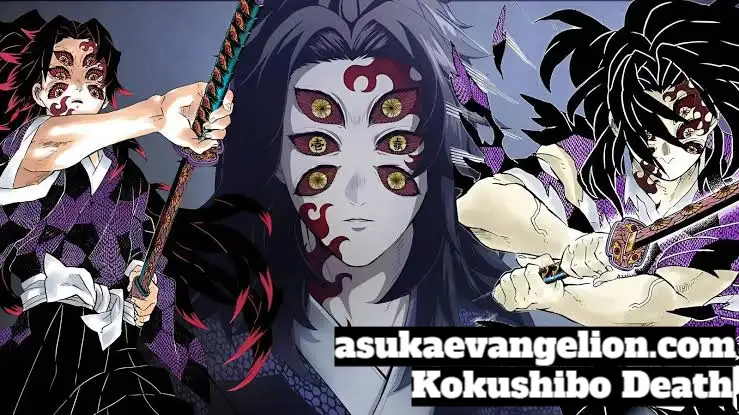
If you have been following Demon Slayer, you already know that no character hits quite like Kokushibo. He is cold, terrifying, and almost impossible to beat. He is the Upper Rank One demon, the strongest among Muzan’s Twelve Kizuki, and a warrior who has lived and killed for centuries. So when his death scene finally arrives, it does not just feel like a battle ending. It feels like history closing a chapter that should have ended long ago.
Kokushibo death is one of the most emotionally loaded moments in the entire manga. It brings together brotherhood, regret, identity, and the cost of choosing power over humanity. This article breaks down exactly how did kokushibo die in demon slayer? who defeats him, what his final thoughts reveal, and why that ending still stirs up strong feelings in the fandom. Whether you are new to the story or revisiting it, you will find everything you need right here.
Kokushibo Death: Who Killed Kokushibo and How Did He Die?
Kokushibo, the Upper Rank One demon, is defeated through the combined efforts of four Demon Slayers:
- Gyomei Himejima
- Sanemi Shinazugawa
- Muichiro Tokito
- Genya Shinazugawa
However, Gyomei and Sanemi are the two who ultimately behead Kokushibo. source: fandom.com
How did Kokushibo die?
During the battle, Muichiro manages to stab Kokushibo with his bright red Nichirin sword, which severely interferes with Kokushibo’s regeneration. Genya also uses his Blood Demon Art to restrain and weaken him.
Gyomei and Sanemi then attack together and cut off Kokushibo’s head. But Kokushibo does something almost impossible: he regenerates his head, believing that he has finally overcome the weakness that normally causes demons to die from decapitation.
Then Kokushibo sees his own reflection in Sanemi’s sword. He realizes how monstrous and grotesque he has become after spending centuries trying to surpass his twin brother, Yoriichi Tsugikuni.
At this point, his regeneration begins to fail. His injuries return, his body starts crumbling, and he ultimately loses the will to continue fighting. The combination of Muichiro’s red blade, Genya’s Blood Demon Art, and Kokushibo’s own psychological collapse leads to his destruction.
Why Was Kokushibo So Difficult to Defeat?
- He was Upper Rank One
- Kokushibo was the strongest of Muzan’s Twelve Kizuki.
- He had remained at the top for centuries, defeating countless Demon Slayers.
- He was originally a Demon Slayer
- Before becoming a demon, Kokushibo was Michikatsu Tsugikuni, the twin brother of Yoriichi Tsugikuni.
- His experience with Breathing Styles gave him an enormous advantage.
- He used Moon Breathing
- His Moon Breathing produced numerous crescent-shaped attacks.
- His Blood Demon Art made these attacks even more unpredictable by creating additional blades and crescents.
- His regeneration was extraordinary
- Like other powerful demons, Kokushibo could regenerate rapidly.
- Even after suffering extremely serious injuries, he continued fighting.
- He possessed the Demon Slayer Mark
- Kokushibo had awakened his Demon Slayer Mark during his human life.
- Unlike most marked swordsmen, he survived for centuries after awakening it because becoming a demon removed the normal lifespan limitation.
- He could see the Transparent World
- This ability allowed him to perceive opponents’ bodies and movements at an extraordinary level.
- Combined with his experience, it made him extremely difficult to surprise.
- He had an extremely powerful body
- His physical strength, speed, reflexes, and durability were far beyond ordinary Hashira-level demons and humans.
- It took multiple Hashira-level fighters to stop him
- The battle required Gyomei Himejima, Sanemi Shinazugawa, Muichiro Tokito, and Genya Shinazugawa.
- Even with several fighters working together, Kokushibo pushed them to their limits.
The biggest reason
The most important factor was that Kokushibo had the skills of an elite Demon Slayer combined with the supernatural abilities of an Upper Rank demon. He wasn’t simply powerful—he had centuries to refine his swordsmanship and abilities.
Who Fought Kokushibo?
fought four Demon Slayers during the Infinity Castle battle:
- Gyomei Himejima — Stone Hashira
- Sanemi Shinazugawa — Wind Hashira
- Muichiro Tokito — Mist Hashira
- Genya Shinazugawa — Sanemi’s younger brother
All four were crucial to defeating Kokushibo. Muichiro and Genya ultimately died from their injuries, while Gyomei and Sanemi survived the battle. source: fandom.com
The main fighters: Gyomei + Sanemi + Muichiro + Genya vs. Kokushibo. fill the battlefield. He regenerates at an incredible speed. He is precise, calm, and absolutely brutal.
How the Fight Unfolds
Early in the kokushibo death battle dominates. He overwhelms Muichiro, cutting off his arm and leaving him critically wounded. He handles Genya and Sanemi with frightening ease. The heroes look outmatched at every turn.
But the tide begins to shift. Muichiro awakens his Demon Slayer Mark, giving him the strength needed to continue fighting Kokushibo. A rare power boost that enhances a swordsman’s abilities dramatically. Gyomei and Sanemi also awaken their Marks. The three Hashira push Kokushibo to his absolute limits.
Genya plays a pivotal role too. He absorbs Kokushibo’s cells, allowing him to use demonic regeneration during the fight. But Kokushibo fatally wounds Genya, who disintegrates as a result of the demon cells inside him breaking down.
The Hashira finally manage to overwhelm Kokushibo. His body is destroyed to a point where even his demonic regeneration cannot keep up. At last, he begins to die.
Kokushibo’s Final Moments: What He Sees Before He Dies
This is where Kokushibo death becomes something far more than just a battle conclusion.
As he lies dying, Kokushibo does not rage. He does not curse his enemies. Instead, he experiences a vision. He sees his brother, Yoriichi, once more.
In that moment, something breaks open inside him. He realizes the truth he spent centuries running from: he never hated Yoriichi. He loved him. He admired him more than anyone else in the world. The envy he felt was rooted in love and longing, not contempt.
He remembers a moment from their childhood. Yoriichi had played a flute that Michikatsu had carved. That single memory is so tender, so human, that it stands in sharp contrast to the centuries of violence Kokushibo lived through.
He also sees that despite all his power, despite becoming Upper Rank One and mastering Moon Breathing, he never surpassed Yoriichi. He realizes with devastating clarity that Yoriichi, even in old age and near blindness, had still defeated him in their final duel centuries ago. Yoriichi had died standing upright, mid-strike, at over eighty years old. That image haunted Kokushibo his entire demonic life.
In his final seconds, Kokushibo tries to regenerate one last time. His body instinctively fights to survive. But then, something extraordinary happens: his own body refuses. His cells stop regenerating. It is as though even his demonic form recognizes that he no longer deserves to live, or perhaps that he no longer wants to.
He crumbles and disintegrates.
Why Did Kokushibo Lose?
- He faced multiple Hashira-level fighters
Kokushibo was Upper Rank One, but he had to fight several elite opponents at once. Gyomei and Sanemi were especially important in keeping up with him. - Muichiro awakened the Demon Slayer Mark
Muichiro’s Mark greatly increased his physical abilities and allowed him to contribute despite being severely injured. - Genya’s Blood Demon Art was crucial
Genya’s ability to absorb demon flesh temporarily gave him unusual powers and helped restrict Kokushibo during the battle. - Gyomei and Sanemi were exceptionally strong
Gyomei’s physical strength and Sanemi’s speed, endurance, and combat experience allowed them to survive Kokushibo’s devastating attacks. - The Red Nichirin Blades caused serious damage
The red blades interfered with demon regeneration, making Kokushibo’s wounds much harder to recover from. - Kokushibo’s own emotions contributed to his defeat
This is arguably the biggest thematic reason. After seeing his reflection and realizing what he had become, Kokushibo became emotionally shaken. His obsession with surpassing his brother Yoriichi Tsugikuni had driven his entire existence, but he ultimately realized that his pursuit had turned him into something monstrous.
The Short Answer
Kokushibo didn’t lose because he was weaker than one Demon Slayer. He lost because an exceptionally strong team exploited his weaknesses, inflicted wounds that limited his regeneration, and eventually broke his will to continue fighting.
Why Kokushibo Death Hits So Hard
You might wonder why a villain’s death affects readers so deeply. Here is why Kokushibo is different.
He Is a Tragedy, Not Just a Monster
Kokushibo is not evil in a cartoonish way. He is a man who made a terrible choice driven by very human emotions: insecurity, ambition, fear of inadequacy, and the desperation to matter.
He had talent. He had skill. He had a brother who genuinely loved him. And he threw all of it away because he could not accept being second-best. That is a kind of pain most readers can actually understand on some level.
The Brother Dynamic Is the Heart of Everything
The relationship between Michikatsu and Yoriichi is one of the most emotionally rich sibling dynamics in kokushibo death manga. Yoriichi never looked down on his brother. He never gloated. He simply lived, breathed, and fought at a level that Michikatsu could not reach no matter how hard he tried.
That kind of gap, where the other person is not even trying to outshine you, is often the most crushing kind of rivalry. It is not a competition. It is just an unbridgeable difference. And Michikatsu let that difference destroy him.
His Death Mirrors His Failure
Kokushibo spent centuries gaining power specifically so he would not die as a weak human. And yet, his death comes not from weakness but from an inability to move past his humanity. His regret, his longing, his unresolved grief over his brother — those human emotions are what finally stop his body from regenerating.
That is poetic writing at its finest.
Key Characters Involved in the Kokushibo Death Scene
Here is a quick breakdown of each character’s role:
Gyomei Himejima He is the anchor of the fight. Gyomei’s raw physical power and stone-solid technique make him the most capable of matching Kokushibo blow for blow. His Demon Slayer Mark puts immense strain on his body, knowing it will shorten his life.
Sanemi Shinazugawa Sanemi fights with everything he has. His rare blood type makes him uniquely attractive to demons, which is both a danger and a weapon. He pushes through injuries that would stop most warriors cold.
Muichiro Tokito Muichiro is young, but his connection to his ancestor’s bloodline and his awakened Mark make him crucial to the fight. He fights through devastating injuries. His sacrifice and resilience are central to the battle’s outcome.
Genya Shinazugawa Genya’s role is often underappreciated. He cannot use breathing techniques the way others can. But his ability to consume demons and gain their powers gives the team an edge. His death in this battle is one of the most heartbreaking moments in the arc.
The Significance of Moon Breathing in This Fight
Kokushibo’s Moon Breathing is a direct derivation of Yoriichi’s Sun Breathing. It is powerful, versatile, and almost impossible to read. During the fight, he uses multiple forms that produce crescent-shaped slashes with incredible range and density.
What makes Moon Breathing so fascinating is what it represents. Kokushibo spent centuries refining a breathing style that is essentially a shadow of his brother’s. He built his entire identity as a demon around something that started as an imitation.
Even his greatest achievement as a warrior points back to Yoriichi.
What Happens After Kokushibo Dies
After Kokushibo death, the battle in the Infinity Castle continues. The story does not pause for grief. Other fights are happening simultaneously, and Muzan himself is still alive and dangerous.
However, the fall of Upper Rank One sends a clear signal. The Demon Slayer Corps, despite enormous losses, can win. The seemingly untouchable hierarchy of muzan reaction to kokushibo death demons is crumbling.
Gyomei, Sanemi, and the surviving fighters carry forward the weight of what they sacrificed to bring Kokushibo down. Muichiro, despite surviving the fight, does not make it through the full battle later in the arc.
The cost of this victory is enormous. That is exactly the kind of storytelling that makes Demon Slayer memorable.
Common Questions Fans Ask About Kokushibo Death
Does Kokushibo feel regret when he dies?
Yes. His final vision is flooded with regret. He sees Yoriichi, remembers their shared childhood, and understands that his centuries-long pursuit of power was rooted in love he never properly expressed. He dies carrying the weight of that truth.
Does Yoriichi appear in Kokushibo’s death scene?
Yoriichi appears in Kokushibo’s dying vision. It is not a physical appearance since Yoriichi had died long before the events of the main story. But in Kokushibo’s mind, his brother is present in his final moments.
Did Kokushibo ever surpass Yoriichi?
No. Despite centuries of living as a demon and refining Moon Breathing to an extraordinary level, Kokushibo never surpassed his brother. Their final duel, which took place when Yoriichi was an old man, ended with Yoriichi landing a near-fatal blow before dying on his feet. That moment defined Kokushibo’s entire demonic existence.
Lessons the Story Teaches Through This Death
Demon Slayer uses Kokushibo to explore ideas that go far beyond a typical shonen battle.
Here are the core themes his death highlights:
- Envy destroys more than weakness ever could. Kokushibo had everything he needed to live a meaningful life. His envy cost him his humanity, his family, and ultimately his peace.
- Power without purpose is hollow. He achieved immense strength. But without a reason that truly mattered, it gave him no satisfaction.
- You cannot escape your own heart. Even after centuries as a demon, Kokushibo’s human emotions never disappeared. They simply waited. And they returned at the very end.
- Regret is the heaviest thing to carry. His final moments are not filled with pride in his achievements. They are filled with grief over what he gave up.
Kokushibo Death Explained
Kokushibo dies during his final battle against Gyomei, Sanemi, Muichiro, and Genya. Although the Demon Slayers manage to behead him, Kokushibo initially survives and transforms into a more powerful monster. However, after seeing his horrifying form, he realizes how far he has fallen from his former human life as Michikatsu Tsugikuni. His regret and loss of will to continue living cause his body to crumble, finally ending his life.
Conclusion
Kokushibo Death Reason is not just the end of a villain. It is the conclusion of a tragedy that began centuries before the main story. A man who had talent, a loving brother, and a meaningful path chose instead to chase an unwinnable race. He traded everything human about himself for power, and in the end, that very humanity came back to haunt him in his final moments.
What makes his death so powerful is that it asks you a quiet but uncomfortable question: how far would you go to stop feeling like you are not enough?
If you found this breakdown valuable, share it with a fellow Demon Slayer fan. And if you have thoughts on Kokushibo’s arc, especially whether you think he deserved redemption, drop your opinion. This character sparks real conversation, and that is the mark of truly great storytelling.
FAQs
Q1: Who killed kokushibo in Demon Slayer Manga? Kokushibo is defeated by a combined effort from Gyomei Himejima, Sanemi Shinazugawa, Muichiro Tokito, and Genya Shinazugawa. No single person kills him. It takes four elite fighters working together to bring him down.
Q2: What chapter does Kokushibo die in Demon Slayer? Kokushibo dies in Chapter 178 of the Demon Slayer manga. His battle and final moments span the surrounding chapters, but Chapter 178 depicts his final defeat and death.
Q3: Who killed Kokushibo in Infinity Castle? Kokushibo was defeated through the combined efforts of Gyomei Himejima, Sanemi Shinazugawa, Muichiro Tokito, and Genya Shinazugawa during the Infinity Castle Arc. No single Demon Slayer killed him alone; teamwork and sacrifice made the victory possible.
Q4: Why did Kokushibo’s body stop regenerating? His body stopped regenerating because his own will to live faltered. His subconscious, overwhelmed by regret and the memory of his brother, essentially gave up. It is a deeply symbolic moment showing that his human soul was never fully extinguished.
Q5: How strong was Kokushibo compared to other demons? Kokushibo was the strongest demon after Muzan himself. As Upper Rank One, he stood above all other Twelve Kizuki and had lived for centuries, making him one of the most experienced and lethal fighters in the story.
Q6: What is Moon Breathing and who created it? Moon Breathing is a swordsmanship style created by Kokushibo, derived from Yoriichi’s Sun Breathing. It uses fluid, crescent-shaped strikes across multiple forms and is considered nearly impossible to read or counter.
Q7: Did Kokushibo ever fight Yoriichi? Yes. Their final duel took place when Yoriichi was over eighty years old and nearly blind. Despite his age, Yoriichi came within a single strike of killing Kokushibo before dying on his feet. Kokushibo considered that duel his greatest failure.
Q8: Does Genya survive the fight with Kokushibo? No. Genya Shinazugawa dies during the battle. Kokushibo fatally wounds him, and the demonic cells inside Genya cause his body to disintegrate. His death is one of the most heartbreaking losses in the arc.
Q9: Is Kokushibo related to a modern character in Demon Slayer? Muichiro Tokito is a direct descendant of Kokushibo (Michikatsu Tsugikuni). Although Kokushibo and Yoriichi were twin brothers, Muichiro is not a direct descendant of Yoriichi.
Q10: Will Kokushibo appear in the Demon Slayer anime? Yes. The Infinity Castle Arc is being adapted into a film series. Kokushibo’s full battle and death scene are expected to be covered in these films with Ufotable’s signature animation quality.
Author Bio
Zara Malik is an anime and manga writer with over five years of experience covering shonen storytelling, character analysis, and fan culture. She specializes in breaking down complex narratives into clear, engaging reads for both casual viewers and longtime fans. When she is not rewatching classic arcs, she is diving into the themes that make anime storytelling uniquely powerful.
Also read asukaevangelion.com
Email: johanharwen314@gmail.com
Author Name: Johan Harwen